
| Classification:
FE22-004 | Reference:
NTB22-077 | Date:
August 31, 2022 |
VOLUNTARY SAFETY & EMISSIONS RECALL CAMPAIGN 2022 ROGUE; FUEL TANK INSPECTION
CAMPAIGN ID #: PC912
APPLIED VEHICLES: 2022 Rogue (T33)
INTRODUCTION
Nissan is conducting this voluntary safety and emissions recall campaign on certain specific model year 2022 Rogue vehicles to inspect and, if necessary, replace the fuel tank. This service will be performed at no charge to the customer for parts or labor.
IDENTIFICATION NUMBER
Nissan has assigned identification number PC912 to this campaign. This number must appear on all communication and documentation of any nature dealing with this campaign.
IMPORTANT
Attention California Dealers
An Emission Recall Campaign Completion (ERCC) label must be filled out by the technician performing the repair, and then attached to the underside of the vehicle hood. A sample of the label is shown below.
California law prohibits owners from renewing their California registration if emissions related recall work has not been performed. California dealers are now required to issue a proof of correction certificate to vehicle owners upon completion of emissions related recall work. Please fill out one of the campaign completion forms for each owner that has this campaign performed. Instruct owners to keep this certificate unless they are requested to mail it to the DMV. A sample of the form is shown in Figure 2 below.
Orange colored
NOTE:
- These forms (item number CAEMRC 1-20) and labels (item number NIS-UHL-16) are available from Nissan Publications (1-800-247-5321) at no charge.
- When either item (form or label) is ordered, you will automatically receive the other item as well.
REPAIR OVERVIEW
SERVICE PROCEDURE
WARNING
To avoid the risk of death or severe personal injury when inspecting and replacing fuel line parts, be sure to observe the following:
- Put a “WARNING: FLAMMABLE” sign in the work area.
- Be sure to work in a well-ventilated area and furnish the work area with a CO2 fire extinguisher.
- Never smoke while servicing the fuel system.
- Keep open flames, sparks and other ignition sources away from the work area.
- Never bend or twist tubes when they are being installed.
- After installing tubes, check that there is no fuel leakage at connections in the following steps.
- Apply pressure to fuel lines by turning the ignition switch to ON (with engine stopped). Then check for fuel leakage at connections.
- Start the engine, increase RPM and check for fuel leakage at connections.
CAUTION
To avoid the risk of minor personal injury or property damage when inspecting and replacing fuel line parts, be sure to observe the following:
- Perform the operation with the vehicle on level
- Disconnect the quick connector when the tabs are completely
Fuel Tank Inspection
- Place the vehicle on a suitable lift and raise it up.
- Locate the front left corner of the fuel tank.
- Look under the vehicle, just ahead of the left rear wheel/tire assembly.
- Using a light source, find the area to be inspected on the top left front corner of the fuel tank.
- Inspect the top left front corner of the fuel tank for a hole or any drill bit scratches/scuffing (Figure 7 and Figure 8).
- Use your hand to feel for scratching and/or scuffing on the fuel tank.
- The fuel tank should be smooth to the touch in the inspection area.
- Did the fuel tank inspection in step 4 on page 6 reveal a hole or any scratching/scuffing on the top left front corner of the fuel tank?
- GOOD – NO HOLES OR SCRATCHING/SCUFFING
- No repair is Lower the vehicle and remove it from the lift. Refer to CLAIMS INFORMATION to submit a claim for Op Code PC9120.
- NO GOOD – HOLES OR SCRATCHING/SCUFFING FOUND
- Continue to step 6 to replace the fuel
Partition Removal
- Open both rear doors and the back door.
- If present, remove the cardboard box labeled “STOWED ITEMS” (Figure 10).
IMPORTANT: Do not open the cardboard box, it has a tamper proof seal.
- Secure the cardboard box in a safe place, it will be placed back in the vehicle.
- Remove the support arm to partition mount bolts/washers and nuts from both sides (Figure 11 and Figure 12).
- The bolt and nut size is standard ½ inch.
- The nut on the backside will need to be held with a wrench while the bolt is removed.
- Place the bolts/washers and nuts in a secure place, they will be reused later.
- Move to the rear of the vehicle and remove the luggage board.
- Lift the rear of the luggage board up, and pull out toward the rear of the vehicle to remove it.
- Place the luggage board in a clean and secure area.
- Remove the four (4) partition rear support mounting bolts.
- The bolts are 13 mm.
- Place the bolts in a secure place, they will be reused later.
- Carefully remove the partition platform from the vehicle.
- From the rear back door opening, remove the partition platform from the vehicle.
- Be careful to not scratch interior components during removal.
- Place the partition platform in a clean and secure area.
- Move both second row seat backs to the full upright position.
Fuel Tank Replacement
WARNING
To avoid the risk of death or severe personal injury when performing fuel system repairs, follow all ESM Warnings and Cautions.
- Replace the fuel tank.
- Refer to the ESM: ENGINE > FUEL SYSTEM > KR15DDT > REMOVAL AND INSTALLATION > FUEL TANK > Removal and Installation
- Refer to the ESM for all fastener torque specifications
Partition Installation
- Fold both second row seat backs to the fully down position.
- Carefully reinstall the partition platform into the vehicle.
- From the rear back door opening, install the partition platform into the vehicle.
- Be careful to not scratch interior components during installation.
- Install the support arm to partition mount bolts/washers and nuts on both sides (Figure 21 and Figure 22).
- The bolt and nut size is standard ½ inch.
- The nut on the backside will need to be held with a wrench while the bolt is tightened.
- Bolt torque 39 N•m (4.0 kg-m, 29 ft-lb)
- Install the four (4) partition rear support mounting bolts.
- The bolts are 13 mm.
- Bolt torque 21 N•m (2.0 kg-m, 16 ft-lb)
- Install the luggage
- Slide the luggage board into the vehicle from the back door opening.
- Slide the side hooks into the floor trim on each side.
- If applicable, place the cardboard box labeled “STOWED ITEMS” into the rear cargo area.
IMPORTANT: Do not open the cardboard box, it has a tamper proof seal.
- Close both rear doors and the back
- Remove the vehicle from the
PARTS INFORMATION
| DESCRIPTION | MODEL | PART NUMBER | QUANTITY |
| TANK ASSY – FUEL | FWD | 17202-6RR0A | 1 |
| AWD | 17202-6RR1A | 1 | |
| PACKING – FUEL GAUGE | FWD |
17342-6RR0A | 1 |
| AWD | 2 | ||
| PLATE – LOCK, FUEL GAUGE | FWD | 17343-6RE0B | 1 |
| AWD | 17343-6RR0A | 2 | |
| GASKET – EXHAUST | FWD and AWD | 20692-8H30A | 1 |
| BOLT
(Propeller Shaft to Transfer Case) | AWD | 37120-JD00B | 3 |
| BOLT – FIX PROPELLER SHAFT
(Propeller Shaft to Final Drive) | AWD | 37120-JD01A | 4 |
| NUT – FIX PROPELLER SHAFT
(Propeller Shaft to Final Drive) | AWD | 37171-7S00A | 4 |
| NUT
(Propeller Shaft Carrier Bearing) | AWD | 01223-A0121 | 2 |
PC912 – Fuel Tank Inspection – 2022 Nissan Rogue
Fuel Tank Inspection – 2022 Nissan Rogue
Remedy Instructions and TSB
RCRIT-22V660-2776.pdf 1823.913KB
Latest Recalls Documents
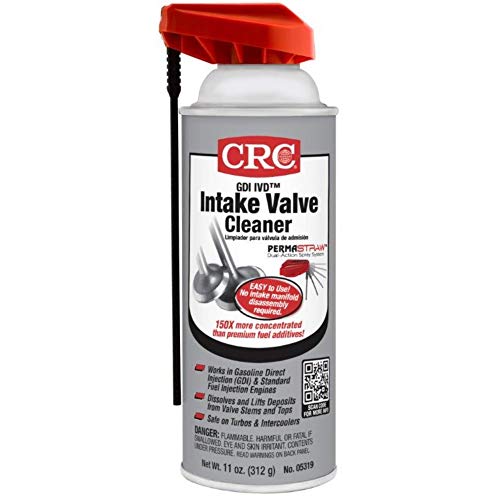
- Proven to clean intake valves on GDI engines and turbo systems
- Easily installed through the air intake system
- Highest concentration PEA (Polyether Amine) detergency available
- Proven to remove up to 46% of GDI Intake Valve deposits in 1 hour
- 150X more concentrated than fuel additives

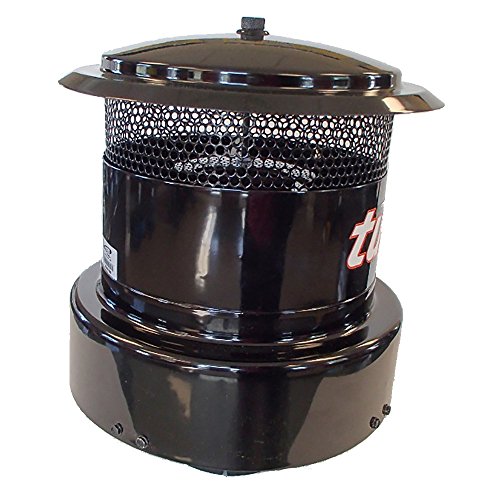
- One New Aftermarket Replacement Turbo Ii Pre-Cleaner For Model 46 (With 4.5" Inlet) That Features Ev
- OEM Numbers Are Provided for Reference Only. Please Verify Fit Prior To Ordering.
- Please Note: Some Listings Use Stock Images for Reference and May Differ from the Actual Product.
- This Aftermarket Part Is Made to Meet or Exceed Manufacturer (OEM) Specifications.
- All OEM part numbers and logos are to be used for identification purposes only.

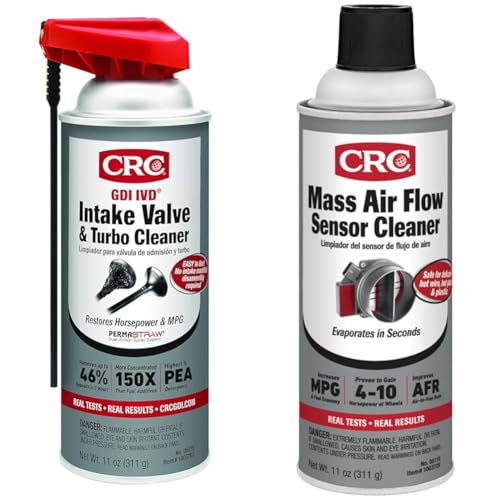
- Proven to clean intake valves on GDI engines and turbo systems with advanced Cozol technology
- Increases horsepower and improves air/fuel ratio and MPG by cleaning mass air flow sensors
- Easily installed CRC cleaner through the air intake system to remove deposits
- CRC GDI cleaner dissolves baked-on carbon deposits for smoother idle
- Mass air flow sensor cleaner dries in seconds and is plastic safe

- Removes Carbon Buildup Fast: Breaks down stubborn, baked‑on carbon deposits on intake valves and turbo components, restoring airflow and improving engine performance.
- Boosts Power & Efficiency: Regular use increases power and torque, improves MPG, and reduces rough idle, hesitation, and hard starts.
- Proven High‑Strength Formula: Delivers concentrated cleaning agents directly to intake valves—up to 150× stronger than premium fuel additives—and removes up to 46% of deposits within the first hour.
- No Engine Teardown Required: Safe for GDI and PFI engines; simply spray through the air intake system for professional‑grade cleaning without disassembly.
- Reduces Emissions & Improves Drivability: Helps restore proper combustion, reduce harmful emissions, and smooth out idle and acceleration for a cleaner‑running engine.
SEOCONTENT-START
Classification: Reference: Date: FE22-004 NTB22-077 August 31, 2022 Bulletins are intended for use by qualified technicians, not ‘do-it-yourselfers’. Qualified technicians are properly trained individuals who have the equipment, tools, safety instruction, and know-how to do a job properly and safely. NOTE: If you believe that a described condition may apply to a particular vehicle, DO NOT assume that it does. See your Nissan dealer to determine if this applies to your vehicle. 1/13 VOLUNTARY SAFETY & EMISSIONS RECALL CAMPAIGN 2022 ROGUE; FUEL TANK INSPECTION CAMPAIGN ID #: PC912 APPLIED VEHICLES: 2022 Rogue (T33) Check Service COMM or Dealer Business Systems (DBS) National Service History to confirm campaign eligibility. INTRODUCTION Nissan is conducting this voluntary safety and emissions recall campaign on certain specific model year 2022 Rogue vehicles to inspect and, if necessary, replace the fuel tank. This service will be performed at no charge to the customer for parts or labor. IDENTIFICATION NUMBER Nissan has assigned identification number PC912 to this campaign. This number must appear on all communication and documentation of any nature dealing with this campaign. DEALER RESPONSIBILITY It is the dealer’s responsibility to check Service COMM or Dealer Business Systems (DBS) National Service History for the campaign status on each vehicle falling within the range of this voluntary safety and emissions recall which for any reason enters the service department. This includes vehicles purchased from private parties or presented by transient (tourist) owners and vehicles in a dealer’s inventory. Federal law requires that new vehicles in dealer inventory which are the subject of a safety recall must be corrected prior to sale. Failure to do so can result in civil penalties by the National Highway Traffic Safety Administration. While federal law applies only to new vehicles, Nissan strongly encourages dealers to correct any used vehicles in their inventory before they are retailed. 2/13 NTB22-077 IMPORTANT Attention California Dealers An Emission Recall Campaign Completion (ERCC) label must be filled out by the technician performing the repair, and then attached to the underside of the vehicle hood. A sample of the label is shown below. California law prohibits owners from renewing their California registration if emissions related recall work has not been performed. California dealers are now required to issue a proof of correction certificate to vehicle owners upon completion of emissions related recall work. Please fill out one of the campaign completion forms for each owner that has this campaign performed. Instruct owners to keep this certificate unless they are requested to mail it to the DMV. A sample of the form is shown in Figure 2 below. NOTE: These forms (item number CAEMRC 1-20) and labels (item number NIS-UHL-16) are available from Nissan Publications (1-800-247-5321) at no charge. When either item (form or label) is ordered, you will automatically receive the other item as well. Figure 1 Figure 2 Orange colored NIS-UHL-16 Technician: Fill in the following: “Checked/Replaced Fuel Tank per Campaign ID # PC912” Fill in “DEALER CODE” and “DATE” Put “ARB/EPA” under “CHANGE AUTHORITY” 3/13 NTB22-077 REPAIR OVERVIEW Use Service COMM or Dealer Business Systems (DBS) National Service History to confirm this campaign applies (Campaign ID # PC912) Replace the fuel tank End Holes, scratching or scuffing found on fuel tank Inspect the fuel tank No holes, scratching or scuffing found on fuel tank 4/13 NTB22-077 SERVICE PROCEDURE To avoid the risk of death or severe personal injury when inspecting and replacing fuel line parts, be sure to observe the following: Put a “WARNING: FLAMMABLE” sign in the work area. Be sure to work in a well-ventilated area and furnish the work area with a CO2 fire extinguisher. Never smoke while servicing the fuel system. Keep open flames, sparks and other ignition sources away from the work area. Never bend or twist tubes when they are being installed. After installing tubes, check that there is no fuel leakage at connections in the following steps. 1. Apply pressure to fuel lines by turning the ignition switch to ON (with engine stopped). Then check for fuel leakage at connections. 2. Start the engine, increase RPM and check for fuel leakage at connections. To avoid the risk of minor personal injury or property damage when inspecting and replacing fuel line parts, be sure to observe the following: Perform the operation with the vehicle on level ground. Disconnect the quick connector when the tabs are completely depressed. 5/13 NTB22-077 Fuel Tank Inspection Figure 3 Figure 4 Figure 5 1. Place the vehicle on a suitable lift and raise it up. 2. Locate the front left corner of the fuel tank. Look under the vehicle, just ahead of the left rear wheel/tire assembly. Inspect here Front left corner of fuel tank 6/13 NTB22-077 Figure 6 Figure 7 Figure 8 3. Using a light source, find the area to be inspected on the top left front corner of the fuel tank. 4. Inspect the top left front corner of the fuel tank for a hole or any drill bit scratches/scuffing (Figure 7 and Figure 8). Use your hand to feel for scratching and/or scuffing on the fuel tank. The fuel tank should be smooth to the touch in the inspection area. Inspect here Hole Scratching Fuel tank 7/13 NTB22-077 5. Did the fuel tank inspection in step 4 on page 6 reveal a hole or any scratching/scuffing on the top left front corner of the fuel tank? GOOD – NO HOLES OR SCRATCHING/SCUFFING o No repair is needed. Lower the vehicle and remove it from the lift. Refer to CLAIMS INFORMATION to submit a claim for Op Code PC9120. NO GOOD – HOLES OR SCRATCHING/SCUFFING FOUND o Continue to step 6 to replace the fuel tank. Partition Removal Figure 9 Figure 10 6. Open both rear doors and the back door. 7. If present, remove the cardboard box labeled “STOWED ITEMS” (Figure 10). IMPORTANT: Do not open the cardboard box, it has a tamper proof seal. o Secure the cardboard box in a safe place, it will be placed back in the vehicle. Cardboard box 8/13 NTB22-077 Figure 11 Figure 12 Figure 13 8. Remove the support arm to partition mount bolts/washers and nuts from both sides (Figure 11 and Figure 12). The bolt and nut size is standard ½ inch. The nut on the backside will need to be held with a wrench while the bolt is removed. Place the bolts/washers and nuts in a secure place, they will be reused later. 9. Move to the rear of the vehicle and remove the luggage board. Lift the rear of the luggage board up, and pull out toward the rear of the vehicle to remove it. Place the luggage board in a clean and secure area. Support arm Support arm Bolt Bolt Left side Right side Luggage board 9/13 NTB22-077 Figure 14 Figure 15 Figure 16 10. Remove the four (4) partition rear support mounting bolts. The bolts are 13 mm. Place the bolts in a secure place, they will be reused later. 11. Carefully remove the partition platform from the vehicle. From the rear back door opening, remove the partition platform from the vehicle. Be careful to not scratch interior components during removal. Place the partition platform in a clean and secure area. 12. Move both second row seat backs to the full upright position. Mounting bolts Partition platform 10/13 NTB22-077 Fuel Tank Replacement To avoid the risk of death or severe personal injury when performing fuel system repairs, follow all ESM Warnings and Cautions. 13. Replace the fuel tank. Refer to the ESM: ENGINE > FUEL SYSTEM > KR15DDT > REMOVAL AND INSTALLATION > FUEL TANK > Removal and Installation o Refer to the ESM for all fastener torque specifications Figure 17 Figure 18 FWD AWD 11/13 NTB22-077 Partition Installation Figure 19 Figure 20 Figure 21 Figure 22 14. Fold both second row seat backs to the fully down position. 15. Carefully reinstall the partition platform into the vehicle. From the rear back door opening, install the partition platform into the vehicle. Be careful to not scratch interior components during installation. 16. Install the support arm to partition mount bolts/washers and nuts on both sides (Figure 21 and Figure 22). The bolt and nut size is standard ½ inch. The nut on the backside will need to be held with a wrench while the bolt is tightened. Bolt torque 39 N•m (4.0 kg-m, 29 ft-lb) Partition platform Support arm Support arm Bolt Bolt 12/13 NTB22-077 Figure 23 Figure 24 Figure 25 Figure 26 17. Install the four (4) partition rear support mounting bolts. The bolts are 13 mm. Bolt torque 21 N•m (2.0 kg-m, 16 ft-lb) 18. Install the luggage board. Slide the luggage board into the vehicle from the back door opening. Slide the side hooks into the floor trim on each side. 19. If applicable, place the cardboard box labeled “STOWED ITEMS” into the rear cargo area. IMPORTANT: Do not open the cardboard box, it has a tamper proof seal. 20. Close both rear doors and the back door. 21. Remove the vehicle from the lift. Mounting bolts Mounting bolts Luggage board Cardboard box 13/13 NTB22-077 PARTS INFORMATION DESCRIPTION MODEL PART NUMBER QUANTITY TANK ASSY – FUEL FWD 17202-6RR0A 1 AWD 17202-6RR1A 1 PACKING – FUEL GAUGE FWD 17342-6RR0A 1 AWD 2 PLATE – LOCK, FUEL GAUGE FWD 17343-6RE0B 1 AWD 17343-6RR0A 2 GASKET – EXHAUST FWD and AWD 20692-8H30A 1 BOLT (Propeller Shaft to Transfer Case) AWD 37120-JD00B 3 BOLT – FIX PROPELLER SHAFT (Propeller Shaft to Final Drive) AWD 37120-JD01A 4 NUT – FIX PROPELLER SHAFT (Propeller Shaft to Final Drive) AWD 37171-7S00A 4 NUT (Propeller Shaft Carrier Bearing) AWD 01223-A0121 2 CLAIMS INFORMATION Submit a “CM” line claim using the following claims coding: CAMPAIGN (“CM”) ID DESCRIPTION OP CODE FRT PC912 Inspect Fuel Tank (OK Condition) PC9120 0.2 Inspect Fuel Tank, Remove/Install Partition Parts and Replace Fuel Tank (FWD) PC9121 2.2 Inspect Fuel Tank, Remove/Install Partition Parts and Replace Fuel Tank (AWD) PC9122 3.1 AMENDMENT HISTORY PUBLISHED DATE REFERENCE DESCRIPTION August 31, 2022 NTB22-077 Original bulletin published
**************************************************************************************************************
SEOCONTENT-END
This product presentation was made with AAWP plugin.